
Apocrypha #1
Photographs edited by: Keith Rangi . 2017 – 2021
Vroeger
De hemel van de wolken staat in brand
met opzet wordt de horizon bespot.
Was dat de wereld die ooit beschreven wordt?
Wees voorzichtig,
wees toch voorzichtig,
want de daden, de vermomde daden
zijn de oogst van vroeger.
O land van angst, o land van ondergang,
van bittere vertwijfeling.
Bron: Armando. Liever niet (gedichten).Meppel 2017.
In der Vergangenheit
Der Wolkenhimmel brennt,
der Horizont wird bewusst verspottet.
War das die Welt, die einst beschrieben wurde?
Seid vorsichtig,
seid vorsichtig,
denn die Taten, die verhüllten Taten,
sind die Ernte der Vergangenheit.
O Land der Angst, o Land des Verderbens,
der bitteren Verzweiflung.
Quelle: Armando. Lieber nicht (Gedichte). Meppel 2017.</6>
Autrefois
Le ciel de nuages est en feu
L’horizon est délibérément moqué.
Était-ce le monde qui était autrefois décrit ?
Soyez prudents,
soyez prudents,
car les actes, les actes déguisés
sont la récolte du passé.
Ô terre de peur, ô terre de ruine,
d’amer désespoir.
Source : Armando. Plutôt pas (poèmes). Meppel 2017.
W przeszłości
Niebo chmur płonie
horyzont jest celowo wyśmiewany.
Czy to był świat, który kiedyś opisano?
Uważaj,
uważaj,
bo czyny, zamaskowane czyny
są żniwem przeszłości.
O kraino strachu, o kraino ruiny,
gorzkiej rozpaczy.
Źródło: Armando. Rather not (poems).Meppel 2017.
Earlier
The sky of clouds is on fire
the horizon is deliberately mocked.
Was that the world that was once described?
Be careful,
be careful,
for the deeds, the disguised deeds
are the harvest of the past.
O land of fear, o land of ruin,
of bitter despair.
Source: Armando. Rather not (poems).Meppel 2017.
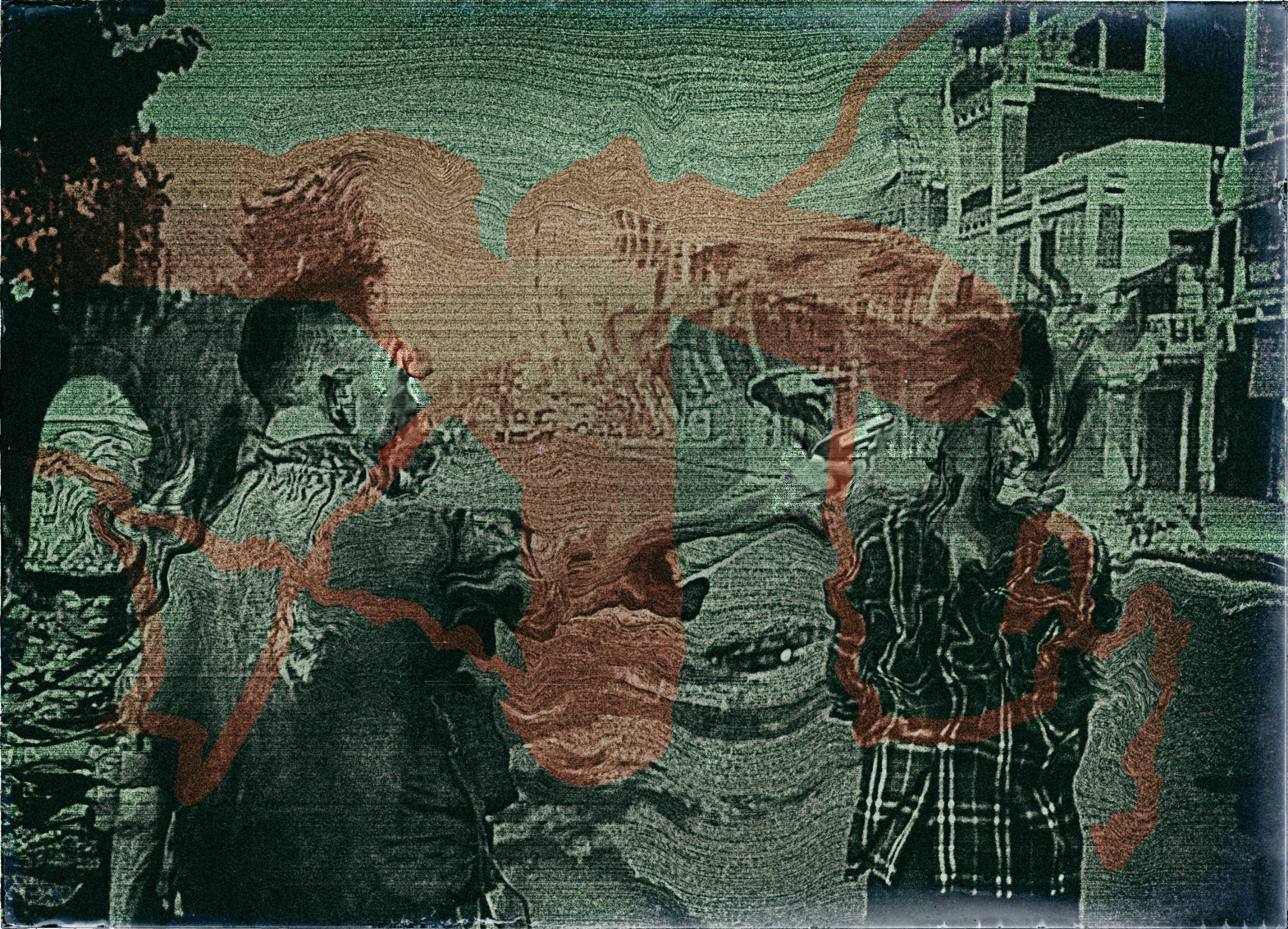
Execution
historical
Saigon execution
Uit de serie: “The Politics of Remembrance”.
Pixel engineering: Keith Rangi & The Traveling Studios. © 2025. Keith Rangi Foundation.
::
South Vietnamese police chief Nguyễn Ngọc Loan shooting Viet Cong captain Nguyễn Văn Lém near the Ấn Quang Pagoda in Saigon.
Bron: https://www.businessinsider.com/eddie-adams-vietnam-war-photos-2016-7?international=true&r=US&IR=T
Auteur: Eddie Adams
Hinrichtung in Saigon
Aus der Reihe: „Die Politik der Erinnerung“.
Pixeltechnik: Keith Rangi & The Traveling Studios. © 2025. Keith Rangi Foundation.
::
Der südvietnamesische Polizeichef Nguyễn Ngọc Loan erschießt den Vietcong-Kapitän Nguyễn Văn Lém in der Nähe der Ấn-Quang-Pagode in Saigon.
Quelle: https://www.businessinsider.com/eddie-adams-vietnam-war-photos-2016-7?international=true&r=US&IR=T
Autor: Eddie Adams
.
Exécution à Saïgon
Tiré de la série « La politique du souvenir ».
Conception des pixels : Keith Rangi et The Traveling Studios. © 2025. Fondation Keith Rangi.
::
Le chef de la police sud-vietnamienne Nguyễn Ngọc Loan abattant le capitaine viet-cong Nguyễn Văn Lém près de la pagode Ấn Quang à Saïgon.
Source : https://www.businessinsider.com/eddie-adams-vietnam-war-photos-2016-7?international=true&r=US&IR=T
Auteur : Eddie Adams.
Egzekucja w Sajgonie
Z serii: „Polityka pamięci”.
Inżynieria pikselowa: Keith Rangi i The Traveling Studios. © 2025. Fundacja Keitha Rangiego.
::
Południowowietnamski szef policji Nguyễn Ngọc Loan strzela do kapitana Viet Congu Nguyễn Văn Léma w pobliżu pagody Ấn Quang w Sajgonie.
Źródło: https://www.businessinsider.com/eddie-adams-vietnam-war-photos-2016-7?international=true&r=US&IR=T
Autor: Eddie Adams
.
Saigon execution
From the series: “The Politics of Remembrance”.
Pixel engineering: Keith Rangi & The Traveling Studios. © 2025. Keith Rangi Foundation.
::
South Vietnamese police chief Nguyễn Ngọc Loan shooting Viet Cong captain Nguyễn Văn Lém near the Ấn Quang Pagoda in Saigon.
Source: https://www.businessinsider.com/eddie-adams-vietnam-war-photos-2016-7?international=true&r=US&IR=T
Author: Eddie Adams.
.
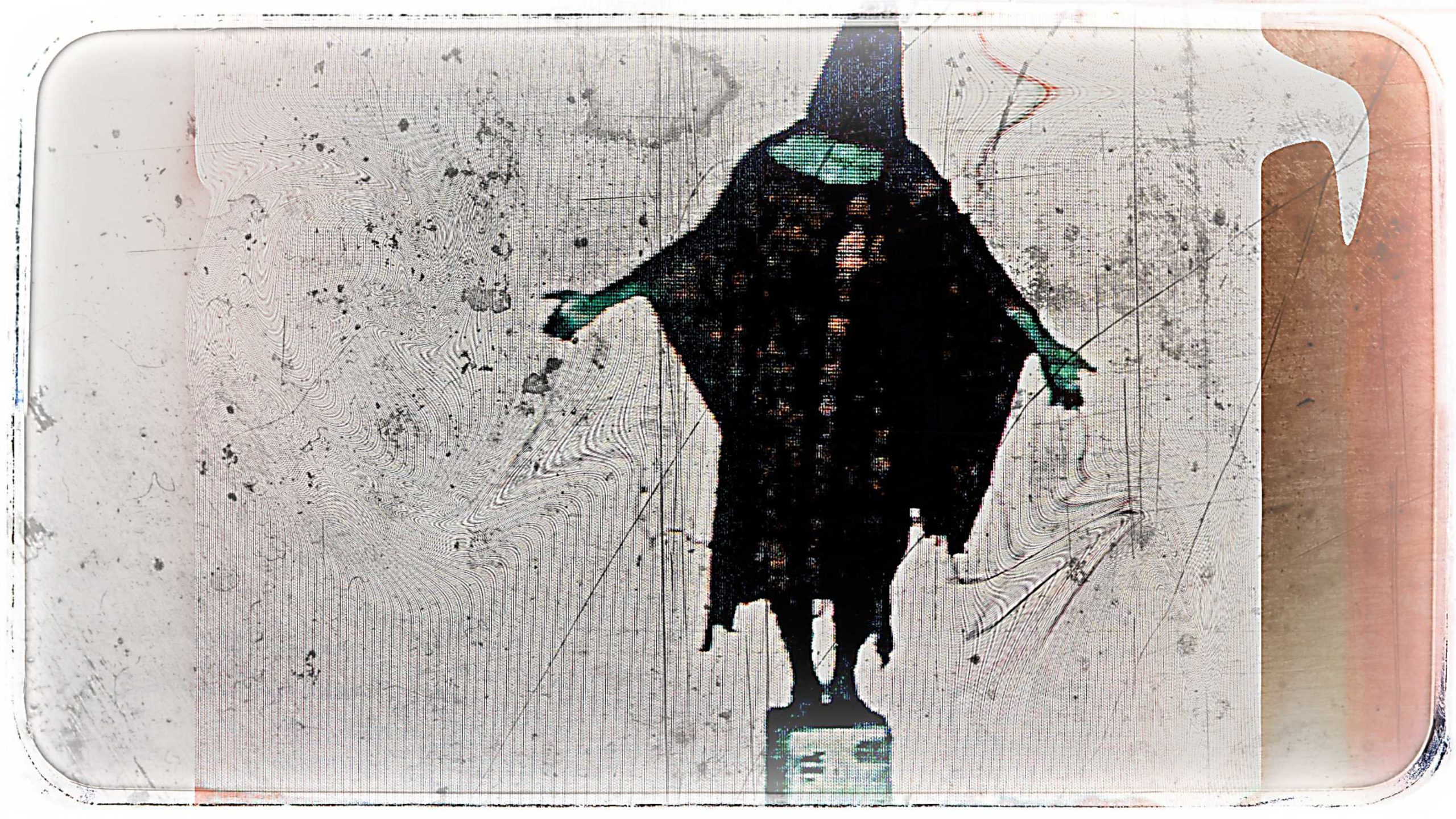
Hooded
historical
Hooded Man
Uit de serie: “The Politics of Remembrance”.
Pixel engineering: Keith Rangi & The Traveling Studios. © 2025. Keith Rangi Foundation.
::
23:01 uur, 4 november 2003. Gedetineerde met zak over zijn hoofd, staand op een kist met draden eraan vastgemaakt. Alle bijschriften zijn rechtstreeks afkomstig uit CID-materiaal. U.S. Army/Criminal Investigation Command (CID). In beslag genomen door de Amerikaanse overheid. Classificatie: De Man met de kap. Dit is een van de foto’s van sergeant Ivan Frederick van de gevangene met de bijnaam Gilligan en later correct geïdentificeerd als Abdou Hussain Saad Faleh, staand op de kist met draden aan zijn linker- en rechterhand. Op een andere foto, die ongeveer drie minuten na de iconische foto met een andere camera werd genomen, staat Frederick rechts van Abdou Hussain Saad Faleh.
Bron: https://en.wikipedia.org/wiki/Abu_Ghraib_torture_and_prisoner_abuse. ©Copyright van de Amerikaanse overheid
Mann mit Kapuze
Aus der Serie: „Die Politik der Erinnerung“.
Pixelentwicklung: Keith Rangi & The Travelling Studios. © 2025. Keith Rangi Foundation.
::
23:01 Uhr, 4. November 2003. Häftling mit Sack über dem Kopf steht auf einer Kiste mit Drähten. Alle Bildunterschriften stammen direkt aus CID-Materialien. US Army / Criminal Investigation Command (CID). Von der US-Regierung beschlagnahmt. Hinweis: Der Mann mit Kapuze. Dies ist eines der Fotos von Staff Sgt. Ivan Frederick, das den Gefangenen mit dem Spitznamen Gilligan zeigt, der später korrekt als Abdou Hussain Saad Faleh identifiziert wurde. Er steht auf der Kiste mit Drähten an seiner linken und rechten Hand. Auf einem weiteren Foto, das etwa drei Minuten nach dem ikonischen Bild mit einer anderen Kamera aufgenommen wurde, steht Frederick rechts von Abdou Hussain Saad Faleh.
Quelle: https://en.wikipedia.org/wiki/Abu_Ghraib_torture_and_prisoner_abuse. © Urheberrecht der US-Regierung
L’Homme encapuchonné
De la série « La politique du souvenir ».
Pixel engineering : Keith Rangi & The Travelling Studios. © 2025. Fondation Keith Rangi.
::
23 h 01, 4 novembre 2003. Détenu, sac sur la tête, debout sur une boîte à laquelle sont attachés des fils. Toutes les légendes sont tirées directement des documents du CID. Armée américaine / Commandement des enquêtes criminelles (CID). Saisie par le gouvernement américain. Note : L’Homme encapuchonné. Il s’agit d’une des photographies du sergent-chef Ivan Frederick représentant le prisonnier surnommé Gilligan, plus tard correctement identifié comme étant Abdou Hussain Saad Faleh, debout sur la boîte, des fils attachés à ses mains gauche et droite. Sur une autre photo, prise environ trois minutes après la photo emblématique avec un autre appareil, Frederick se tient à droite d’Abdou Hussain Saad Faleh.
Source : https://en.wikipedia.org/wiki/Abu_Ghraib_torture_and_prisoner_abuse. © Copyright du gouvernement américain
Zakapturzony mężczyzna
Z serii: „Polityka pamięci”.
Inżynieria pikselowa: Keith Rangi & The Traveling Studios. © 2025. Keith Rangi Foundation.
::
23:01, 4 listopada 2003 r. Więzień z workiem na głowie, stojący na pudełku z przymocowanymi do niego przewodami. Wszystkie podpisy pochodzą bezpośrednio z materiałów CID. Armia USA/Dowództwo Śledcze (CID). Zajęte przez rząd USA. Klasyfikacja: Zakapturzony mężczyzna. To jedno ze zdjęć sierżanta Ivana Fredericka przedstawiające więźnia o pseudonimie Gilligan, później prawidłowo zidentyfikowanego jako Abdou Hussain Saad Faleh, stojącego na pudełku z przewodami przymocowanymi do jego lewej i prawej ręki. Na innym zdjęciu, zrobionym innym aparatem około trzy minuty po kultowym zdjęciu, Frederick stoi po prawej stronie Abdou Hussain Saad Faleh.
Źródło: https://en.wikipedia.org/wiki/Abu_Ghraib_torture_and_prisoner_abuse. ©Copyright U.S. Government
Hooded Man
From the series: “The Politics of Remembrance”.
Pixel engineerinhg: Keith Rangi & The Travelling Studios. © 2025. Keith Rangi Foundation.
::
11:01 p.m., Nov. 4, 2003. Detainee with bag over head, standing on box with wires attached. All caption information is taken directly from CID materials. U.S. Army / Criminal Investigation Command (CID). Seized by the U.S. Government. Note: The Hooded Man. This is one of Staff Sgt. Ivan Frederick’s photographs of the prisoner nicknamed Gilligan and later correctly identified as Abdou Hussain Saad Faleh standing on the box with wires attached to his left and right hand. In another photo, which was taken approximately three minutes after the iconic picture with a different camera, Frederick is standing to the right of Abdou Hussain Saad Faleh
source: https://en.wikipedia.org/wiki/Abu_Ghraib_torture_and_prisoner_abuse. ©U.S. Government copyright
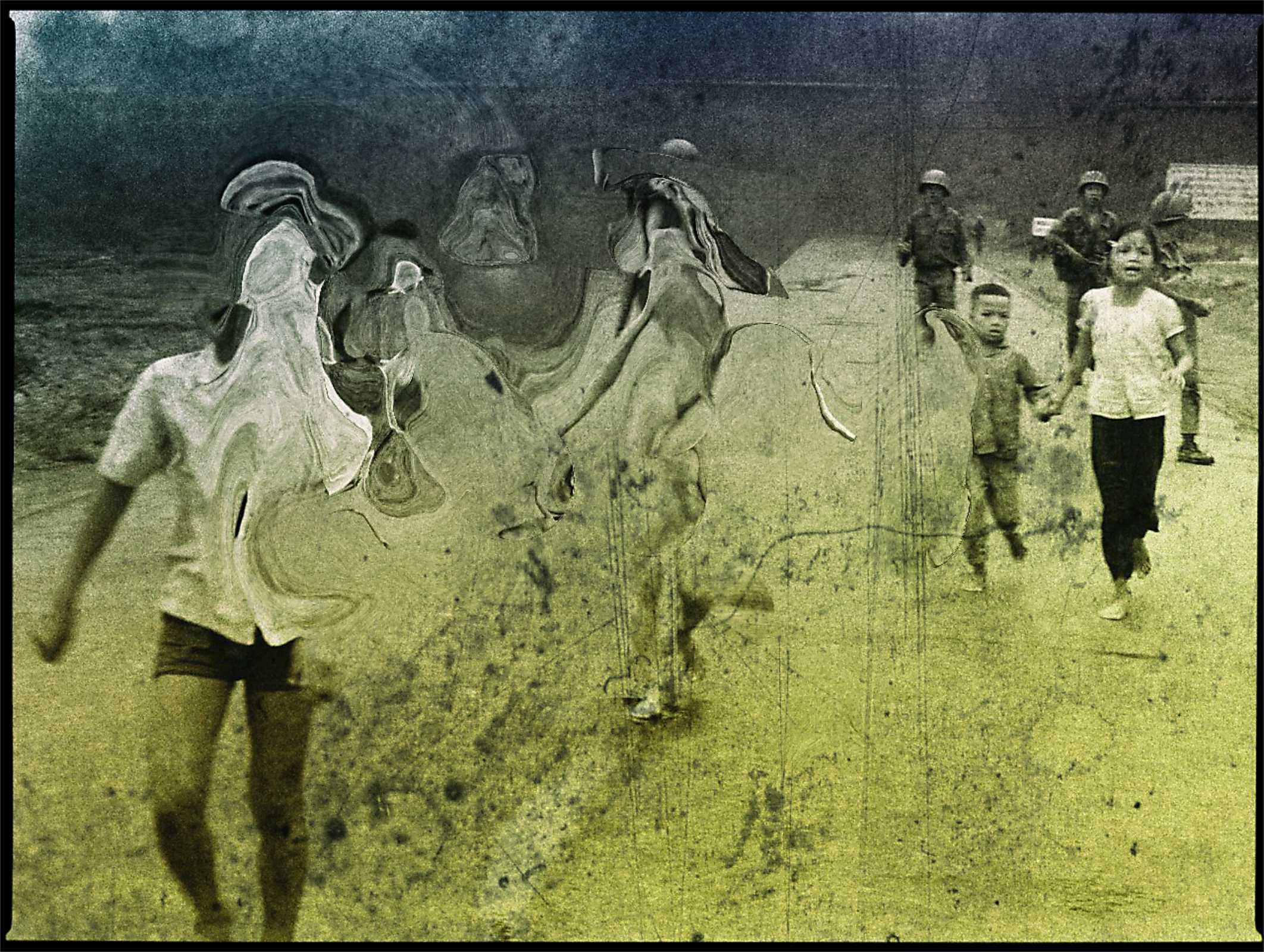
Napalm
historical
Napalm
Uit de serie:“The Politics of Remembrance”.
Pixel engineering: Keith Rangi & The Travelling Studios. © 2025. Keith Rangi Foundation.
::
“De terreur van de oorlog”, foto van Phan Thi Kim Phuc die over een weg rent in de buurt van Trảng Bàng, Vietnam, nadat een vliegtuig van de Zuid-Vietnamese luchtmacht een napalmbom op een groep Zuid-Vietnamese soldaten en burgers heeft gegooid. Het Amerikaanse leger vermoedde dat het dorp een bolwerk van de Vietcong was en zag de groep aan voor vijandelijke strijders terwijl ze vluchtten voor een tempel. Kim Phúc overleefde door haar brandende kleren van zich af te scheuren.
Kim Phúc (9 jaar; middelbare leeftijd) rent naakt over straat, ernstig verbrand. Ook op de foto staan haar oudere broer Phan Thanh Tam (12 jaar; uiterst links), haar jongere broer Phan Thanh Phuoc (5 jaar; links op de achtergrond, terugkijkend) en haar jongere neven Ho Van Bo en Ho Thi Ting (respectievelijk een jongen en een meisje; rechts midden).
Auteur: Nick Ut, Associated Press.
Bron: https://en.wikipedia.org/wiki/File:The_Terror_of_War.jpg
Napalm
Aus der Serie: „Die Politik der Erinnerung“.
Pixelentwicklung: Keith Rangi & The Travelling Studios. © 2025. Keith Rangi Foundation.
::
„Der Terror des Krieges“, ein Foto, das Phan Thi Kim Phuc zeigt, wie sie eine Straße in der Nähe von Trảng Bàng, Vietnam, entlangläuft, nachdem ein Flugzeug der südvietnamesischen Luftwaffe eine Napalmbombe auf eine Gruppe südvietnamesischer Soldaten und Zivilisten abgeworfen hatte. Die US-Streitkräfte vermuteten das Dorf als Hochburg des Vietcong und hielten die Gruppe auf der Flucht aus einem Tempel für feindliche Kämpfer. Kim Phúc überlebte, indem sie ihre brennenden Kleider vom Leib riss.
Kim Phúc (9 Jahre, Mitte) rennt nackt und schwer verbrannt auf der Straße. Ebenfalls abgebildet sind ihr älterer Bruder Phan Thanh Tam (12 Jahre; ganz links), ihr jüngerer Bruder Phan Thanh Phuoc (5 Jahre; im Hintergrund links, Blick zurück) und ihre jüngeren Cousins Ho Van Bo und Ho Thi Ting (Junge und Mädchen; Mitte rechts).
Autor: Nick Ut, Associated Press.
Quelle: https://en.wikipedia.org/wiki/File:The_Terror_of_War.jpg
Napalm
Tiré de la série « La politique du souvenir ».
Pixel engineering : Keith Rangi & The Travelling Studios. © 2025. Keith Rangi Foundation.
::
« La terreur de la guerre », photographie montrant Phan Thi Kim Phuc courant sur une route près de Trảng Bàng, au Vietnam, après qu’une bombe au napalm a été larguée sur un groupe de soldats et de civils sud-vietnamiens par un avion de l’armée de l’air sud-vietnamienne. L’armée américaine soupçonnait le village d’être un bastion du Viet Cong et a pris le groupe pour des combattants ennemis alors qu’ils fuyaient un temple. Kim Phúc a survécu en arrachant ses vêtements en feu.
Kim Phúc (9 ans ; au milieu) court nue dans la rue, gravement brûlée. Sur la photo figurent également son frère aîné, Phan Thanh Tam (12 ans, à l’extrême gauche), son frère cadet, Phan Thanh Phuoc (5 ans, à l’arrière-plan à gauche, en regardant en arrière), et ses cousins cadets, Ho Van Bo et Ho Thi Ting (respectivement garçon et fille, au milieu à droite).
Auteur : Nick Ut, Associated Press.
Source: https://en.wikipedia.org/wiki/File:The_Terror_of_War.jpg
Napalm
Z serii: „Polityka pamięci”.
Inżynieria pikselowa: Keith Rangi & The Travelling Studios. © 2025. Keith Rangi Foundation.
::
„Terror wojny”, zdjęcie Phan Thi Kim Phuc biegnącej drogą w pobliżu Trang Bang w Wietnamie, po tym jak samolot południowowietnamskich sił powietrznych zrzucił bombę napalmową na grupę południowowietnamskich żołnierzy i cywilów. Wojsko amerykańskie podejrzewało, że wioska jest twierdzą Wietkongu i pomyliło grupę z wrogimi bojownikami, gdy uciekali ze świątyni. Kim Phuc przeżyła, zrywając płonące ubranie.
Kim Phuc (9 lat; w średnim wieku) biegnie nago ulicą, poważnie poparzona. Na zdjęciu są również jej starszy brat Phan Thanh Tam (w wieku 12 lat; skrajnie po lewej), jej młodszy brat Phan Thanh Phuoc (w wieku 5 lat; w tle po lewej, patrząc wstecz) i jej młodsi kuzyni Ho Van Bo i Ho Thi Ting (odpowiednio chłopiec i dziewczynka; środek po prawej).
Autor: Nick Ut, Associated Press.
Źródło: https://en.wikipedia.org/wiki/File:The_Terror_of_War.jpg
Napalm
From the series: “The Politics of Remembrance”.
Pixel engineerinhg: Keith Rangi & The Travelling Studios. © 2025. Keith Rangi Foundation.
::
“The Terror of War”, photograph showing Phan Thi Kim Phuc running down a road near Trảng Bàng, Vietnam, after a napalm bomb was dropped on a group of South Vietnamese soldiers and civilians by a plane from the South Vietnam Air Force. The village was suspected by United States Army forces of being a Viet Cong stronghold, and mistook the group for enemy combatants while they were fleeing from a Temple. Kim Phúc survived by tearing off her burning clothes.
Kim Phúc (aged 9; middle) runs naked in the street, severely burned. Also pictured is her older brother Phan Thanh Tam (aged 12; far left), younger brother Phan Thanh Phuoc (aged 5; background left, looking back), and younger cousins Ho Van Bo and Ho Thi Ting (boy and girl, respectively; middle right).
Author: Nick Ut, Associated Press.
Source: https://en.wikipedia.org/wiki/File:The_Terror_of_War.jpg
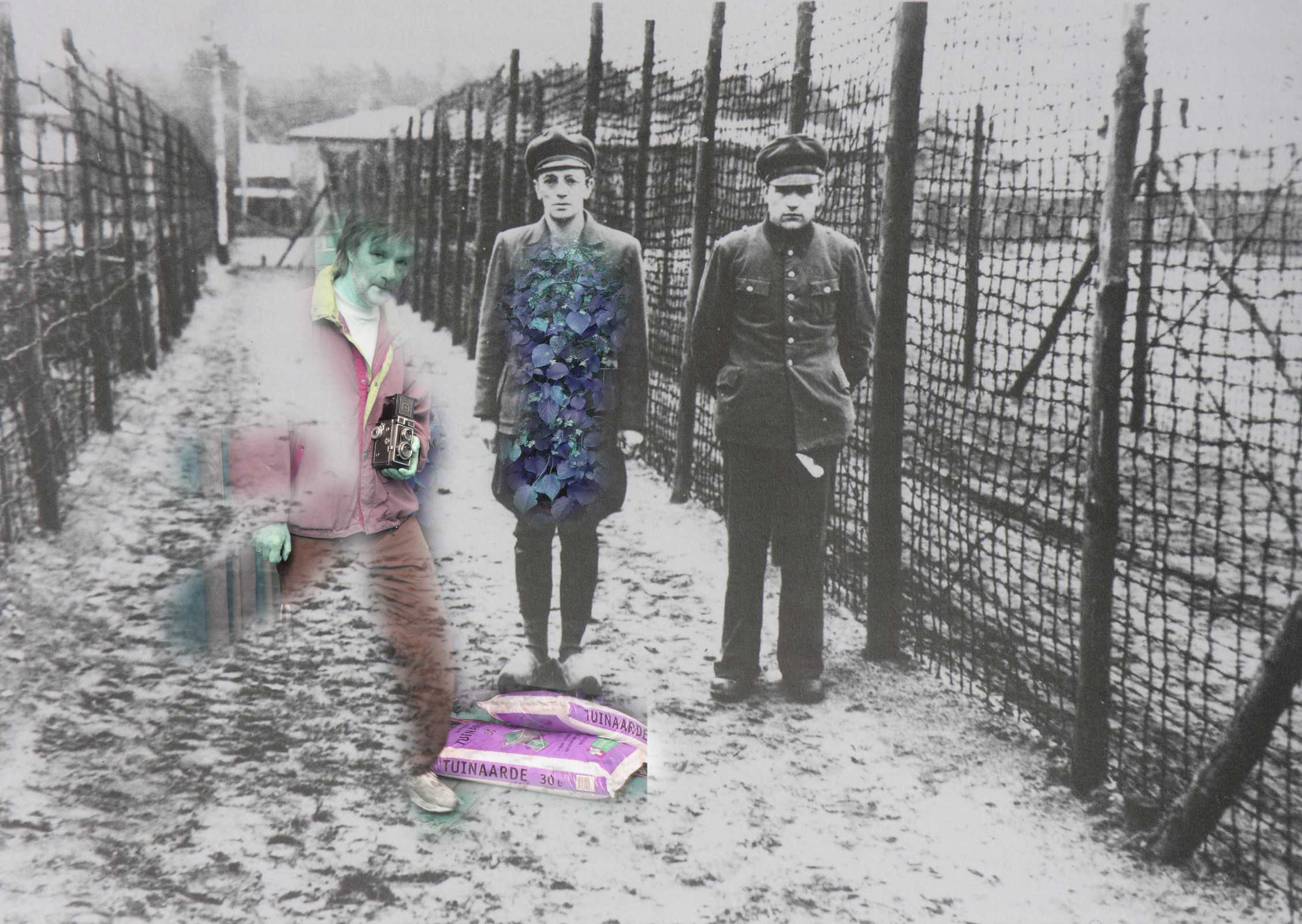
Selfie in De Rozentuin
historical
Selfie in De Rozentuin
Uit de serie: “The Politics of Remembrance”.
Pixel engineering: Keith Rangi & The Travelling Studios. © 2025. Keith Rangi Foundation.
::
Kamp Amersfoort. Links kampbeul Westerveldt. Kampbeul Amersfoort nr. 3.’ Berend Johan Westerveld was Blockführer in kamp Amersfoort waar hij zich schuldig maakte aan vele misstanden. Na de oorlog bekende hij alles wat hem ten laste werd gelegd en werd in 1948 ter dood veroordeeld.
Tijdens de Tweede Wereldoorlog werden gevangenen in Kamp Amersfoort door de kampbewakers op het binnenterrein gezet. Hier was een smal stuk grond met aan alle kanten prikkeldraad dat berucht werd als strafplaats. De gevangenen moesten daar in weer en wind, uren, soms zelfs dagen, blijven staan. De naam Rozentuin was een spotnaam: de gevangenen stelden zich de punten van het prikkeldraad voor als rozen, een teken van hoop.
Auteur onbekend.
Bron: https://beeldbankwo2.nl/nl/beelden/detail/0fde10b2-025a-11e7-904b-d89d6717b464/media/5983ac5c-9792-ede1-b511-3f04243d8e7d
Selfie im Rozentuin
Aus der Serie: „Die Politik der Erinnerung“.
Pixelentwicklung: Keith Rangi & The Travelling Studios. © 2025. Keith Rangi Foundation.
::
Lager Amersfoort. Links: Lagerhenker Westerveldt. Amersfoorter Lagerhenker Nr. 3. Berend Johan Westerveld war Blockführer im Lager Amersfoort, wo er sich zahlreicher Misshandlungen schuldig machte. Nach dem Krieg gestand er alle gegen ihn erhobenen Vorwürfe und wurde 1948 zum Tode verurteilt.
Während des Zweiten Weltkriegs wurden die Gefangenen des Lagers Amersfoort von den Lagerwachen im Innenhof untergebracht. Dabei handelte es sich um ein schmales, allseitig mit Stacheldraht umzäuntes Gelände, das als Strafe berüchtigt wurde. Die Gefangenen mussten dort bei jedem Wetter stunden-, manchmal sogar tagelang stehen. Der Name Rozentuin war ein spöttischer Name: Die Gefangenen stellten sich die Spitzen des Stacheldrahts als Rosen vor, ein Zeichen der Hoffnung.
Fotograf unbekannt.
Quelle: https://beeldbankwo2.nl/nl/beelden/detail/0fde10b2-025a-11e7-904b-d89d6717b464/media/5983ac5c-9792-ede1-b511-3f04243d8e7d
(Google Übersetzer)
Selfie au Rozentuin
De la série : « La politique du souvenir ».
Ingénierie des pixels : Keith Rangi & The Travelling Studios. © 2025. Fondation Keith Rangi.
::
Camp d’Amersfoort. À gauche, le bourreau Westerveldt. Bourreau n° 3 du camp d’Amersfoort. Berend Johan Westerveld était Blockführer au camp d’Amersfoort, où il se rendit coupable de nombreux abus. Après la guerre, il avoua tout ce qui lui était reproché et fut condamné à mort en 1948.
Pendant la Seconde Guerre mondiale, les gardiens du camp d’Amersfoort plaçaient les prisonniers dans la cour intérieure. Il s’agissait d’une étroite bande de terre entourée de barbelés, une punition devenue tristement célèbre. Les prisonniers devaient y rester debout par tous les temps, pendant des heures, parfois même des jours. Le nom de Rozentuin était moqueur : les prisonniers imaginaient les pointes des barbelés comme des roses, signe d’espoir.
Photographe inconnu.
Source : https://beeldbankwo2.nl/nl/beelden/detail/0fde10b2-025a-11e7-904b-d89d6717b464/media/5983ac5c-9792-ede1-b511-3f04243d8e7d
Selfie w ogrodzie różanym
Z serii: „Polityka Erinnerung”.
Pixelentwicklung: Keith Rangi & The Traveling Studios. © 2025. Fundacja Keith Rangi Foundation
::
Dolny Amersfoort. Po lewej: Lagerhenker Westerveldt. Amersfoorter Lagerhenker nr 3. Berend Johan Westerveld był Blockführerem w Lager Amersfoort, który dopuścił się poważnego wykroczenia. Po wojnie wszystko zostało osiągnięte w czasie wojny i zostało ukończone w 1948 roku.
Während des Zweiten Weltkriegs zostali zabrani do więźniów Lagers Amersfoort z Lagerwachen im Innenhof. Działał na własną rękę ze schmales, wszystko w odniesieniu do swojego otoczenia, jak donosił Strafe. Więźniowie muszą przebywać w wodzie w ciągu dnia, aby mogli tam przebywać przez długi czas. Nazwa Ogrodu Różanego była nazwą spöttischer: Gefangeneen ustanowili sobie Spitzen des Stacheldrahts als Rosen vor, ein Zeichen der Hoffnung.
Zdjęcie nieznane.
Quelle: https://beeldbankwo2.nl/nl/beeld/detail/0fde10b2-025a-11e7-904b-d89d6717b464/media/5983ac5c-9792-ede1-b511-3f04243d8e7d
Selfie in De Rozentuin
From the series: “The Politics of Remembrance”.
Pixel engineerinhg: Keith Rangi & The Travelling Studios. © 2025. Keith Rangi Foundation.
::
Camp Amersfoort. On the left camp executioner Westerveldt. Amersfoort camp executioner no. 3.’ Berend Johan Westerveld was Blockführer in camp Amersfoort where he was guilty of many abuses. After the war he confessed to everything that was charged against him and was sentenced to death in 1948.
During World War II, prisoners in Camp Amersfoort were placed in the inner courtyard by the camp guards. Here was a narrow piece of land with barbed wire on all sides that became notorious as a punishment. The prisoners had to stand there in all weathers, for hours, sometimes even days. The name Rozentuin was a mocking name: the prisoners imagined the points of the barbed wire as roses, a sign of hope.
Photographer unknown.
Source: https://beeldbankwo2.nl/nl/beelden/detail/0fde10b2-025a-11e7-904b-d89d6717b464/media/5983ac5c-9792-ede1-b511-3f04243d8e7d
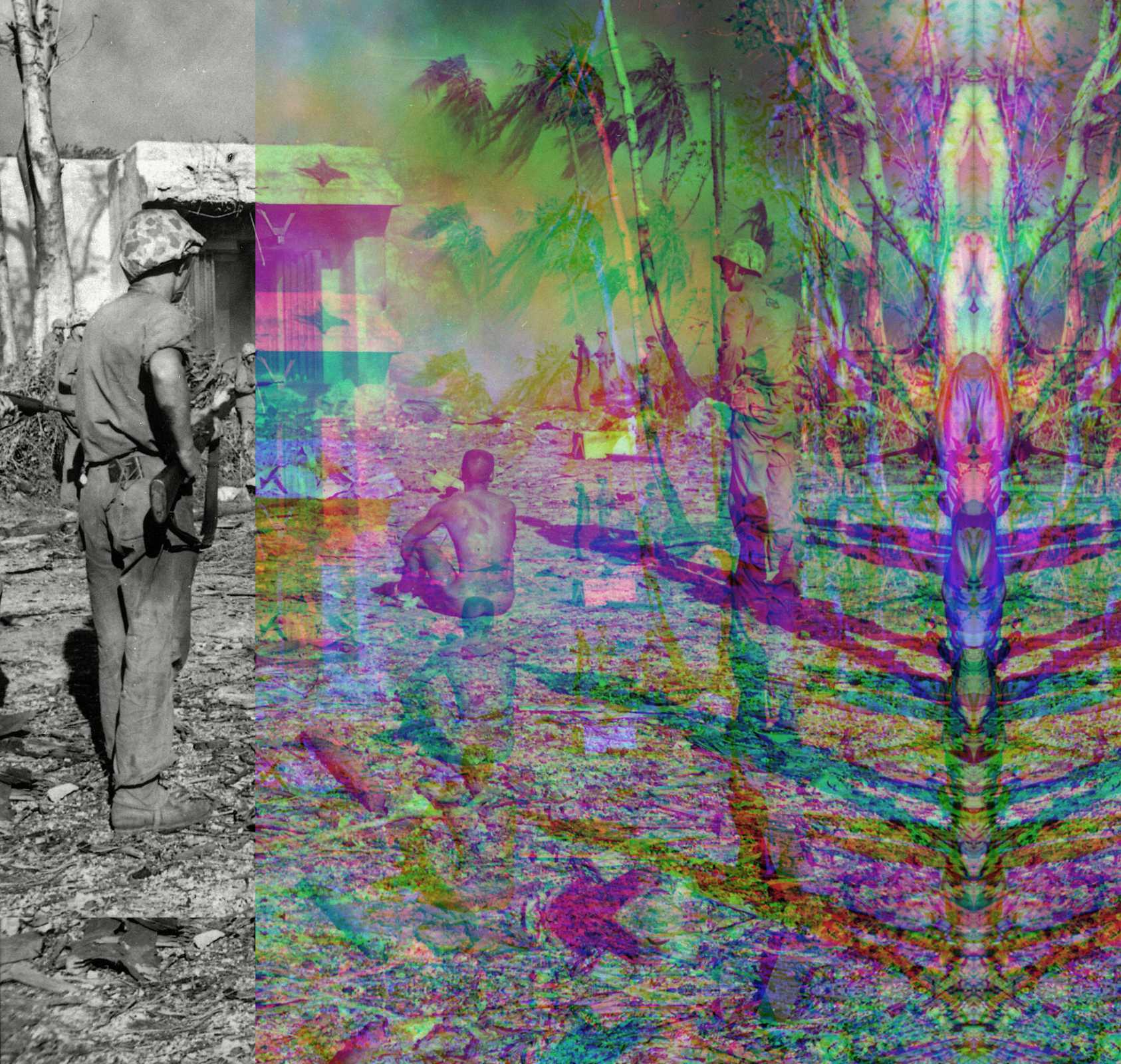
totum
historical
Totum
Uit de serie: “The Politics of Remembrance”.
Pixel-engineering: Keith Rangi & The Travelling Studios. © 2025. Keith Rangi Foundation.
::.
Foto: Naakte Japanse soldaat zittend op de grond, terwijl Amerikaanse mariniers achter hem staan met geweren in de aanslag; een rokend, gebombardeerd gebouw staat op de middenachtergrond. Officieel bijschrift op de voorkant: “Kwajalein U.S.M.C. Foto nr. K-15.” Kwajalein Atoll, Marshalleilanden.
Datum: 02-02-1944
Fotograaf: Fabian, John. Korporaal. Ministerie van Defensie. United States Marine Corps, nu in de collecties van het Nationaal Archief.
(De Slag om de Marshalleilanden. Namen. Amerikaanse mariniers met een Japanse gevangene. ID: HD-SN-99-02968. Nationaal Archief nr. 127-N-70216 OORLOG & CONFLICT BOEK nr.: 1309)
Bron: https://marshall.csu.edu.au/Marshalls/html/WWII_Pix/Kwajalein.html
Totum
Aus der Serie: „Die Politik der Erinnerung“.
Pixelentwicklung: Keith Rangi & The Travelling Studios. © 2025. Keith Rangi Foundation.
::.
Foto: Nackter japanischer Soldat sitzt auf dem Boden, hinter ihm stehen US-Marines mit Gewehren im Anschlag; im Mittelgrund ist ein rauchendes, ausgebombtes Gebäude zu sehen. Offizielle Bildunterschrift auf der Vorderseite: „Kwajalein U.S.M.C. Foto Nr. K-15.“ Kwajalein-Atoll, Marshallinseln.
Datum: 02.02.1944
Fotograf: Fabian, John. Corporal. Verteidigungsministerium. United States Marine Corps, heute in den Sammlungen des Nationalarchivs.
(Die Schlacht um die Marshallinseln. Namur. US-Marines mit einem japanischen Gefangenen. ID: HD-SN-99-02968. Nationalarchiv Nr. 127-N-70216, Kriegs- und Konfliktbuch Nr.: 1309)
Quelle: https://marshall.csu.edu.au/Marshalls/html/WWII_Pix/Kwajalein.html
Totum
De la série « La politique du souvenir ».
Ingénierie des pixels : Keith Rangi et The Travelling Studios. © 2025. Fondation Keith Rangi.
::
Photographie : Un soldat japonais nu est assis par terre, des Marines américains se tiennent derrière lui, fusils à la main ; un bâtiment bombardé et fumant se trouve au deuxième plan. Légende officielle au recto : « Kwajalein U.S.M.C. Photo n° K-15.» Atoll de Kwajalein, Îles Marshall.
Date : 02/02/1944
Photographe : Fabian, John. Caporal. Département de la Défense. Corps des Marines des États-Unis, maintenant conservé aux Archives nationales.
(La bataille des îles Marshall. Namur. Marines américains avec un prisonnier japonais. ID : HD-SN-99-02968. Archives nationales n° 127-N-70216. LIVRE WAR & CONFLICT n° 1309)
Source : https://marshall.csu.edu.au/Marshalls/html/WWII_Pix/Kwajalein.html
Totum
Z serii: „Polityka pamięci”.
Inżynieria pikselowa: Keith Rangi & The Travelling Studios. © 2025. Keith Rangi Foundation.
::
Zdjęcie: Nagi japoński żołnierz siedzący na ziemi, a za nim stoją amerykańscy marines z karabinami w gotowości; w tle dymiący, zbombardowany budynek. Oficjalny podpis na przedniej okładce: „Kwajalein U.S.M.C. Photo No. K-15”. Atol Kwajalein, Wyspy Marshalla.
Data: 02-02-1944
Fotograf: Fabian, John. Kapral. Departament Obrony. Korpus Piechoty Morskiej Stanów Zjednoczonych, obecnie w zbiorach Narodowego Archiwum. (Bitwa o Wyspy Marshalla. Nazwiska. Amerykańscy marines z japońskim więźniem. ID: HD-SN-99-02968. National Archives nr 127-N-70216 WAR & CONFLICT BOOK nr: 1309)
Źródło: https://marshall.csu.edu.au/Marshalls/html/WWII_Pix/Kwajalein.html
Totum
From the series: “The Politics of Remembrance”.
Pixel engineering: Keith Rangi & The Travelling Studios. © 2025. Keith Rangi Foundation.
::
Photograph: Naked Japanese soldier sitting on the ground while United States Marines stand behind him with rifles at the ready; a smoking, bombed-out building is in the middleground. Official caption on front: “Kwajalein U.S.M.C. Photo No. K-15.” Kwajalein Atoll, Marshall Islands.
Date: 02/02/1944
Photographer: Fabian, John. Corporal. Department of Defense. United States Marine Corps, now in the collections of the National Archives.
(The Battle of the Marshall Islands. Namur. US Marines with a Japanese prisoner. ID: HD-SN-99-02968. National Archive# 127-N-70216 WAR & CONFLICT BOOK #: 1309)
Source: https://marshall.csu.edu.au/Marshalls/html/WWII_Pix/Kwajalein.html
tawara
historical
Sprawled
Uit de serie: “The Politics of Remembrance”.
Pixel engineering: Keith Rangi & The Travelling Studios. © 2025. Keith Rangi Foundation.
::
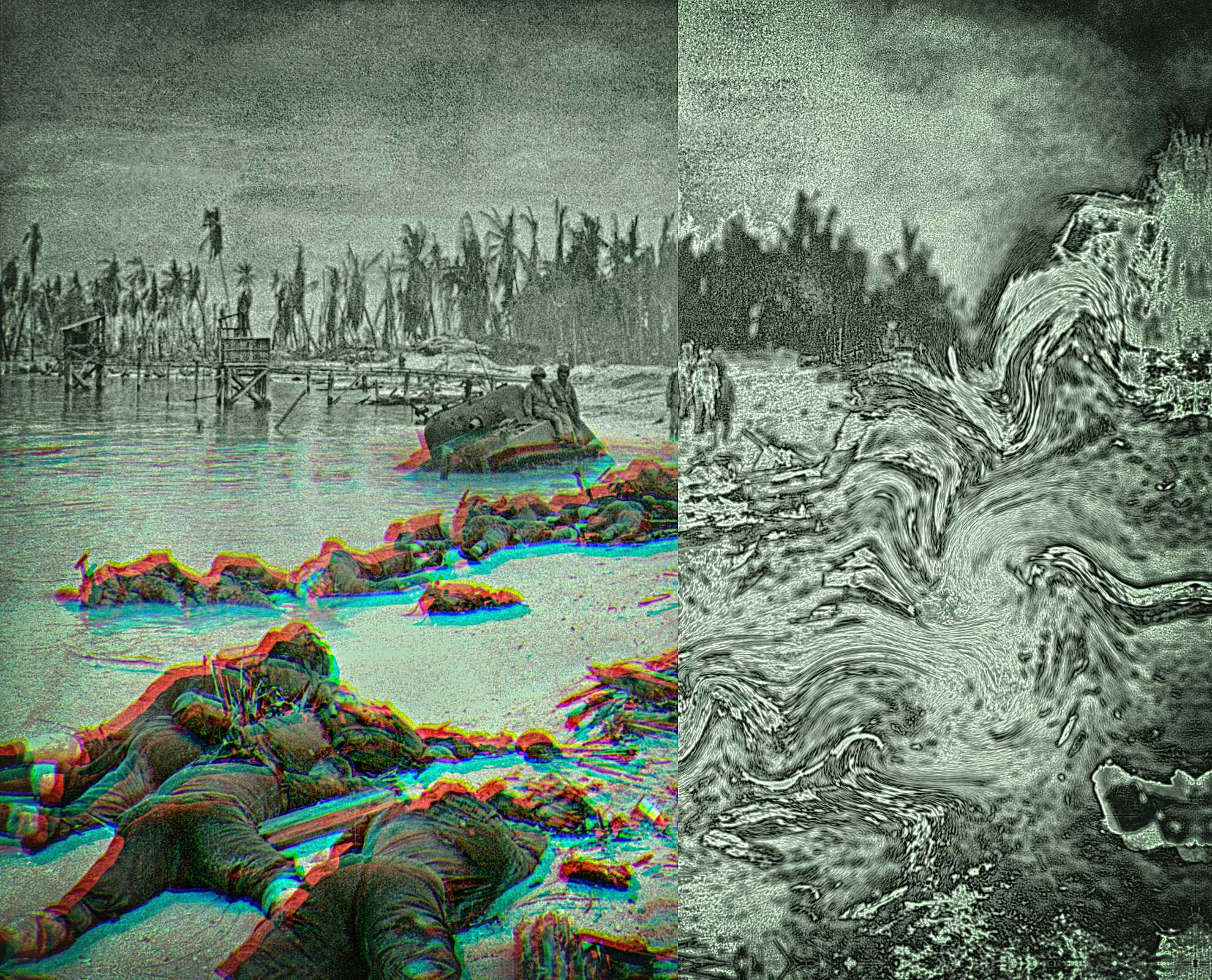
Uitzicht op het strand van Betio Island, Tarawa Atoll, Gilberteilanden, na de Amerikaanse invasie in november 1943. Tarawa werd aangevallen van 20 tot 23 november 1943. Het Amerikaanse Korps Mariniers leed 990 doden en nog eens 2296 gewonden. De Japanners verloren 4713 man. Let op de mannen die op de uitgeschakelde M4 Sherman-tank zaten.
Oorspronkelijke beschrijving: “Uitgestrekte lichamen op het strand van Tarawa, getuigend van de hevigheid van de strijd om dit stuk zand. November 1943.”
::
Bron: U.S. Defense Visual Information Center foto HD-SN-99-03001 [1]; Archief van het Amerikaanse Nationaal Archief, dossier 080-G-57405. Commando Marinegeschiedenis en Erfgoed:
https://www.history.navy.mil/content/history/nhhc/our-collections/photography/numerical-list-of-images/nhhc-series/nh-series/80-G-57000/80-G-57405.html
Ausgestreckt
Aus der Serie: „Die Politik der Erinnerung“.
Pixeltechnik: Keith Rangi & The Travelling Studios. © 2025. Keith Rangi Foundation.
::
Blick auf den Strand der Insel Betio, Tarawa-Atoll, Gilbertinseln, nach der US-Invasion im November 1943. Tarawa wurde vom 20. bis 23. November 1943 angegriffen. Das US Marine Corps erlitt 990 getötete und weitere 2.296 verwundete Marines. Die Japaner verloren 4.713 Mann. Beachten Sie die Männer, die auf dem manövrierunfähigen M4 Sherman-Panzer sitzen.
Originalbeschreibung: „Ausgestreckte Leichen am Strand von Tarawa zeugen von der Heftigkeit des Kampfes um diesen Sandstrand. November 1943.“
::
Quelle: Foto HD-SN-99-03001 des US Defense Visual Information Center [1]; US-Nationalarchiv, Akte 080-G-57405
Naval History and Heritage Command:
https://www.history.navy.mil/content/history/nhhc/our-collections/photography/numerical-list-of-images/nhhc-series/nh-series/80-G-57000/80-G-57405.html
Étendu
De la série : « La politique du souvenir ».
Pixel engineering : Keith Rangi & The Travelling Studios. © 2025. Keith Rangi Foundation.
::
Vue de la plage de l’île Betio, atoll de Tarawa, îles Gilbert, après l’invasion américaine de novembre 1943. Tarawa fut attaquée du 20 au 23 novembre 1943. Le Corps des Marines américains perdit 990 Marines et en blessa 2 296. Les Japonais perdirent 4 713 hommes. Remarquez les hommes assis sur le char Sherman M4 hors d’usage.
Description originale : « Corps étendus sur la plage de Tarawa, témoignant de la férocité de la lutte pour cette étendue de sable. Novembre 1943. »
::
Source : U.S. Defense Visual Information Center, photo HD-SN-99-03001 [1] ; Archives nationales des États-Unis, dossier 080-G-57405. Commandement de l’histoire et du patrimoine navals : https://www.history.navy.mil/content/history/nhhc/our-collections/photography/numerical-list-of-images/nhhc-series/nh-series/80-G-57000/80-G-57405.html
Rozciągnięty
Z serii: „Polityka pamięci”.
Inżynieria pikselowa: Keith Rangi & The Travelling Studios. © 2025. Keith Rangi Foundation.
::
Widok plaży na wyspie Betio, atolu Tarawa, Wyspy Gilberta, po amerykańskiej inwazji w listopadzie 1943 r. Tarawa była atakowana od 20 do 23 listopada 1943 r. Korpus Piechoty Morskiej USA stracił 990 zabitych i 2296 rannych. Japończycy stracili 4713 ludzi. Zwróć uwagę na mężczyzn siedzących na uszkodzonym czołgu M4 Sherman.
Oryginalny opis: „Ciało rozciągnięte na plaży w Tarawie, świadczące o zaciekłości bitwy o ten odcinek piasku. Listopad 1943 r.”
::
Źródło: zdjęcie HD-SN-99-03001 U.S. Defense Visual Information Center [1]; Archiwa Narodowe Stanów Zjednoczonych, plik 080-G-57405. Dowództwo ds. Historii i Dziedzictwa Marynarki Wojennej: https://www.history.navy.mil/content/history/nhhc/our-collections/photography/numerical-list-of-images/nhhc-series/nh-series/80-G-57000/80-G-57405.html
Sprawled
From the series: “The Politics of Remembrance”.
Pixel engineerinhg: Keith Rangi & The Travelling Studios. © 2025. Keith Rangi Foundation.
::.
View of the beach of Betio Island, Tarawa Atoll, Gilbert Islands, after the U.S. invasion in November 1943. Tarawa was attacked from 20 to 23 November 1943, the U.S. Marine Corps sustained 990 Marines killed and a further 2,296 wounded. The Japanese lost 4,713 men. Note the men sitting on the disabled M4 Sherman tank.
Original description: “Sprawled bodies on beach of Tarawa, testifying to ferocity of the struggle for this stretch of sand. November 1943.”
::
Source: U.S. Defense Visual Information Center photo HD-SN-99-03001 [1]; U.S. National Archives file 080-G-57405
Naval History and Heritage Command: https://www.history.navy.mil/content/history/nhhc/our-collections/photography/numerical-list-of-images/nhhc-series/nh-series/80-G-57000/80-G-57405.html
landscape
historical
Alpha Elevation Disruptions
Uit de serie: “The Politics of Remembrance”.
Pixel engineering: Keith Rangi & The Travelling Studios. © 2017. Keith Rangi Foundation.
::
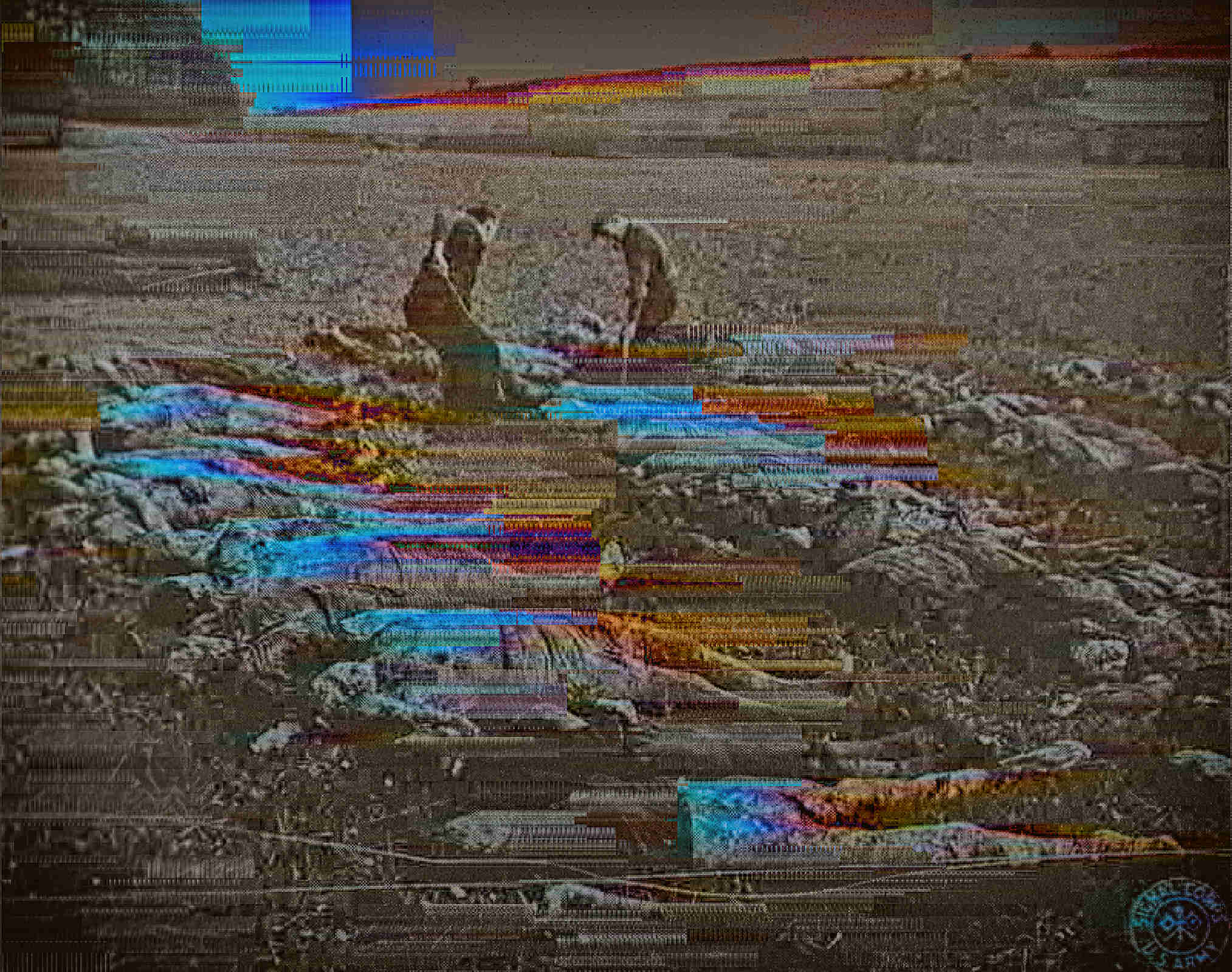
Geopend massagraf in het Hirzenhain-arbeidersopleidingskamp. Mei 1945.
Bron: Nationaal Archief, Washington, D.C. Auteur: Signal Corps (Verenigde Staten Leger)
Alpha-Höhenstörungen
Aus der Serie: „Die Politik der Erinnerung“.
Pixelentwicklung: Keith Rangi & The Travelling Studios. © 2017. Keith Rangi Foundation.
::
Eröffnetes Massengrab im Arbeitserziehungslager Hirzenhain. Mai 1945.
Quelle: National Archives, Washington, D.C. Autor: Signal Corps (US Army)
Perturbations d’élévation alpha
Extrait de la série : « La politique du souvenir ».
Ingénierie des pixels : Keith Rangi et The Travelling Studios. © 2017. Fondation Keith Rangi.
::
Fosse commune ouverte au camp de travail et d’éducation de Hirzenhain. Mai 1945.
Source : Archives nationales, Washington, D.C. Auteur : Signal Corps (armée américaine)
Zakłócenia wysokości alfa
Z serii: „Polityka pamięci”.
Inżynieria pikselowa: Keith Rangi & The Traveling Studios. © 2017. Keith Rangi Foundation.
::
Otwarty masowy grób w obozie szkoleniowym robotników Hirzenhain. Maj 1945.
Źródło: National Archives, Waszyngton, D.C. Autor: Signal Corps (United States Army)
Alpha Elevation Disruptions
From the series: “The Politics of Remembrance”.
Pixel engineerinhg: Keith Rangi & The Travelling Studios. © 2017. Keith Rangi Foundation.
::
Opened mass grave at the Hirzenhain labor education camp. May 1945.
Source: National Archives, Washington, D.C. Author: Signal Corps (United States Army)
party
historical
Party
Uit de serie: “The Politics of Remembrance”.
Pixel engineering: Keith Rangi & The Travelling Studios. © 2025. Keith Rangi Foundation.
::
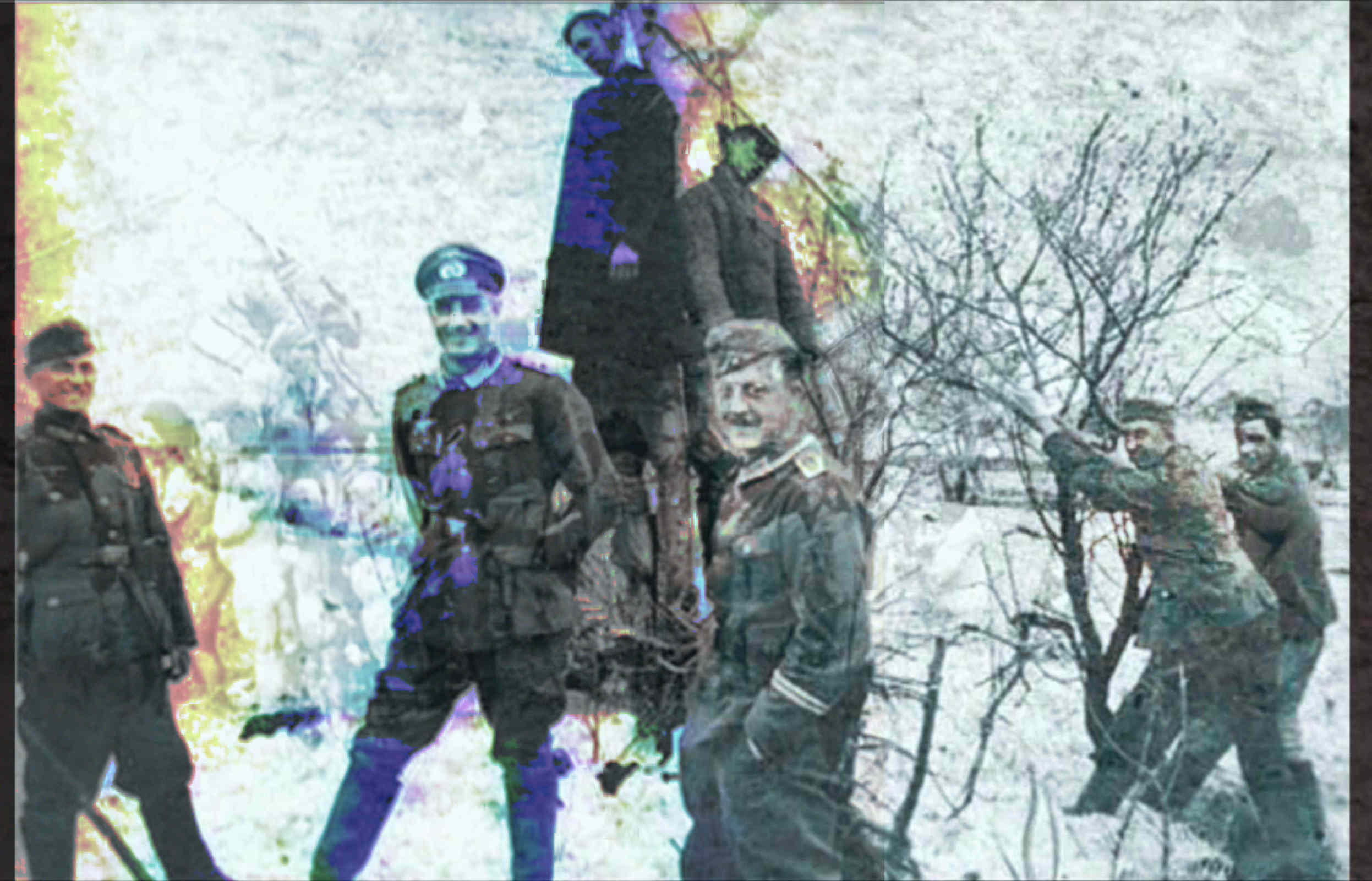
Als reactie op Adolf Hitlers plan om Polen binnen te vallen, richtte Heydrich de Einsatzgruppen opnieuw op om in het kielzog van de Duitse legers te reizen. De leden werden in die tijd gerekruteerd uit de SS, de Sicherheitsdienst (SD) en de politie. Heydrich stelde SS-Obergruppenführer Werner Best aan als commandant. Hij koos de leiders van de taskforces en hun subgroepen, de zogenaamde Einsatzkommandos, uit hoogopgeleide mensen met militaire ervaring. Sommigen waren eerder lid geweest van paramilitaire groepen zoals de Freikorps.
Bron: https://alchetron.com/Einsatzgruppen.
Auteur: Onbekend
Party
Aus der Reihe: „Die Politik der Erinnerung“.
Pixelentwicklung: Keith Rangi & The Travelling Studios. © 2025. Keith Rangi Foundation.
::
Als Reaktion auf Adolf Hitlers Plan, in Polen einzumarschieren, formierte Heydrich die Einsatzgruppen neu, um sie den deutschen Armeen zu folgen. Die Mitglieder kamen zu diesem Zeitpunkt aus der SS, dem Sicherheitsdienst (SD) und der Polizei. Heydrich übertrug SS-Obergruppenführer Werner Best das Kommando. Best wählte die Anführer der Einsatzgruppen und ihrer Untergruppen, der sogenannten Einsatzkommandos, aus gebildeten Personen mit militärischer Erfahrung aus. Einige waren zuvor Mitglieder paramilitärischer Gruppen wie den Freikorps gewesen.
Quelle: https://alchetron.com/Einsatzgruppen.
Autor: Unbekannt
Parti
Tiré de la série : « La politique du souvenir ».
Pixel engineering : Keith Rangi & The Travelling Studios. © 2025. Keith Rangi Foundation.
::
En réponse au projet d’invasion de la Pologne par Adolf Hitler, Heydrich reforma les Einsatzgruppen pour suivre les armées allemandes. Les membres étaient alors issus de la SS, du Sicherheitsdienst (SD) et de la police. Heydrich plaça le SS-Obergruppenführer Werner Best à son commandement, qui choisit les chefs des forces opérationnelles et de leurs sous-groupes, appelés Einsatzkommandos, parmi des personnes instruites et possédant une expérience militaire. Certains avaient auparavant été membres de groupes paramilitaires tels que les Freikorps.
Source : https://alchetron.com/Einsatzgruppen.
Auteur : Inconnu
Party
Z serii: „Polityka pamięci”.
Inżynieria pikselowa: Keith Rangi & The Travelling Studios. © 2025. Keith Rangi Foundation.
::
W odpowiedzi na plan Adolfa Hitlera dotyczący inwazji na Polskę, Heydrich ponownie utworzył Einsatzgruppen, aby podróżować śladem armii niemieckich. W tym czasie członkowie byli rekrutowani z SS, Sicherheitsdienst (SD) i policji. Heydrich mianował dowódcą SS-Obergruppenführera Wernera Besta. Wybrał przywódców grup zadaniowych i ich podgrup, tzw. Einsatzkommandos, spośród wysoko wykształconych ludzi z doświadczeniem wojskowym. Niektórzy byli wcześniej członkami grup paramilitarnych, takich jak Freikorps.
Źródło: https://alchetron.com/Einsatzgruppen.
Autor: Nieznany
Party
From the series: “The Politics of Remembrance”.
Pixel engineerinhg: Keith Rangi & The Travelling Studios. © 2025. Keith Rangi Foundation.
::
In response to Adolf Hitler’s plan to invade Poland, Heydrich re-formed the Einsatzgruppen to travel in the wake of the German armies. Membership at this point was drawn from the SS, the Sicherheitsdienst (Security Service; SD), and the police. Heydrich placed SS-Obergruppenführer Werner Best in command, who chose leaders for the task forces and their subgroups, called Einsatzkommandos, from among educated people with military experience. Some had previously been members of paramilitary groups such as the Freikorps.
Source: https://alchetron.com/Einsatzgruppen.
Author: Unknown
blondi
historical
Blondi
Uit de serie: “The Politics of Remembrance”.
Pixelengineering: Keith Rangi & The Travelling Studios. © 2025. Keith Rangi Foundation.
::
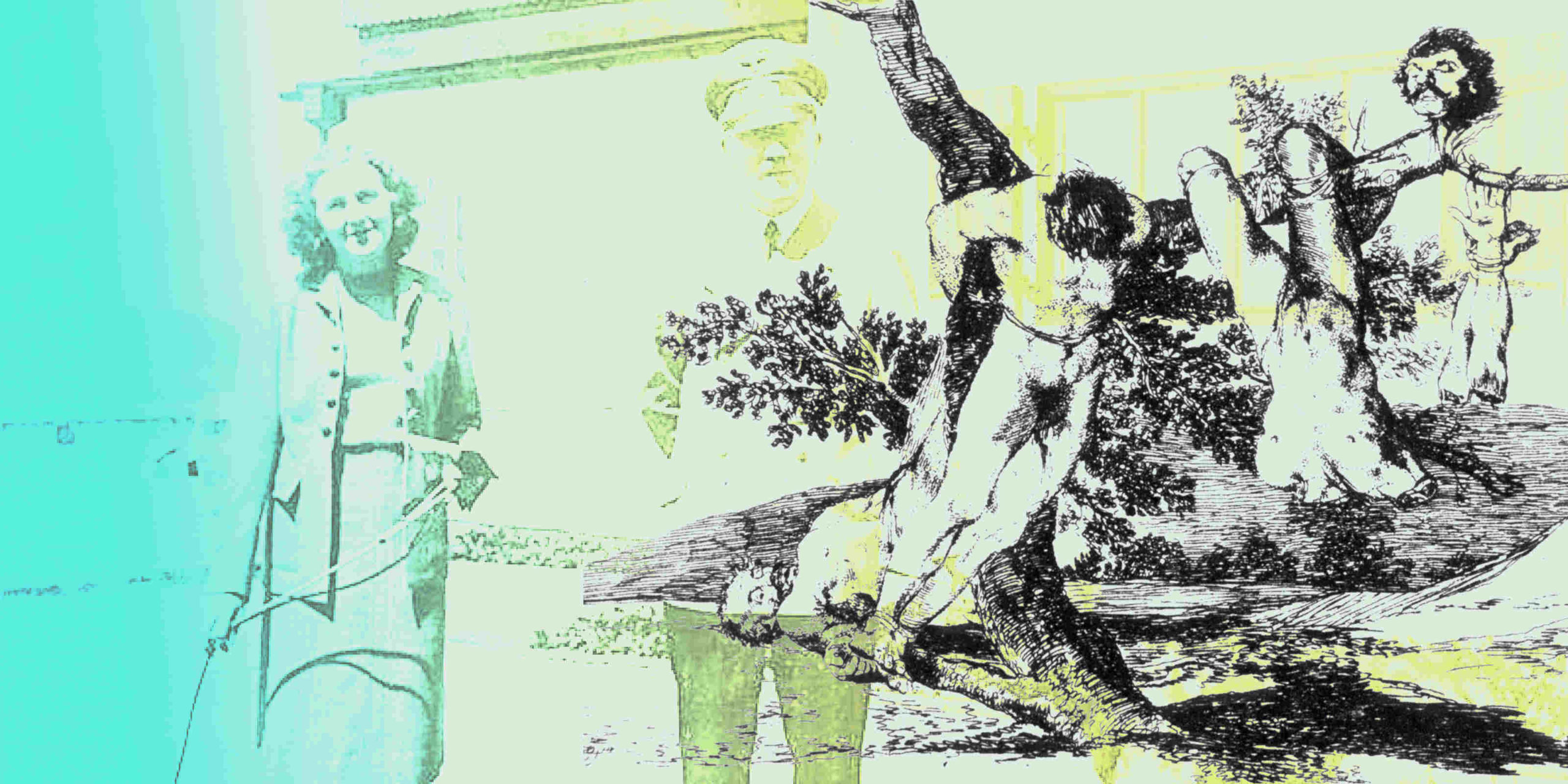
Foto: Adolf Hitler en Eva Braun, met hun honden in Berchtesgaden.
Bron: https://historiek.net/eva-braun-1912-1945/5511/
Auteur: Onbekend.
Afbeelding: “De gruwelen van de oorlog” van Francisco de Goya.
Blondi
Aus der Serie: „Die Politik der Erinnerung“.
Pixelentwicklung: Keith Rangi & The Travelling Studios. © 2025. Keith Rangi Foundation.
::
Foto: Adolf Hitler und Eva Braun mit ihren Hunden in Berchtesgaden.
Quelle: https://historiek.net/eva-braun-1912-1945/5511/
Autor: Unbekannt.
Grafik: „Die Schrecken des Krieges“ von Francisco de Goya.
Blondi
De la série : « La politique du souvenir ».
Ingénierie pixel : Keith Rangi & The Travelling Studios. © 2025. Fondation Keith Rangi.
::
Photographie : Adolf Hitler et Eva Braun, avec leurs chiens à Berchtesgaden.
Source : https://historiek.net/eva-braun-1912-1945/5511/
Auteur : Inconnu.
Illustration : « Les Horreurs de la guerre » de Francisco de Goya.
Blondi
Z serii: „Polityka pamięci”.
Inżynieria pikseli: Keith Rangi i The Traveling Studios. © 2025. Keith Rangi Foundation.
::
Zdjęcie: Adolf Hitler i Eva Braun ze swoimi psami w Berchtesgaden.
Źródło: https://historiek.net/eva-braun-1912-1945/5511/
Autor: Nieznany.
Zdjęcie: „The Horrors of War” autorstwa Francisco de Goi.
Blondi
From the series: “The Politics of Remembrance”.
Pixel engineerinhg: Keith Rangi & The Travelling Studios. © 2025. Keith Rangi Foundation.
::
Photograph: Adolf Hitler and Eva Braun, with their dogs in Berchtesgaden.
Source: https://historiek.net/eva-braun-1912-1945/5511/
Author: Unknown.
Graphic: “The Horrors of War” by Francisco de Goya.
The Photo Gallery
historical
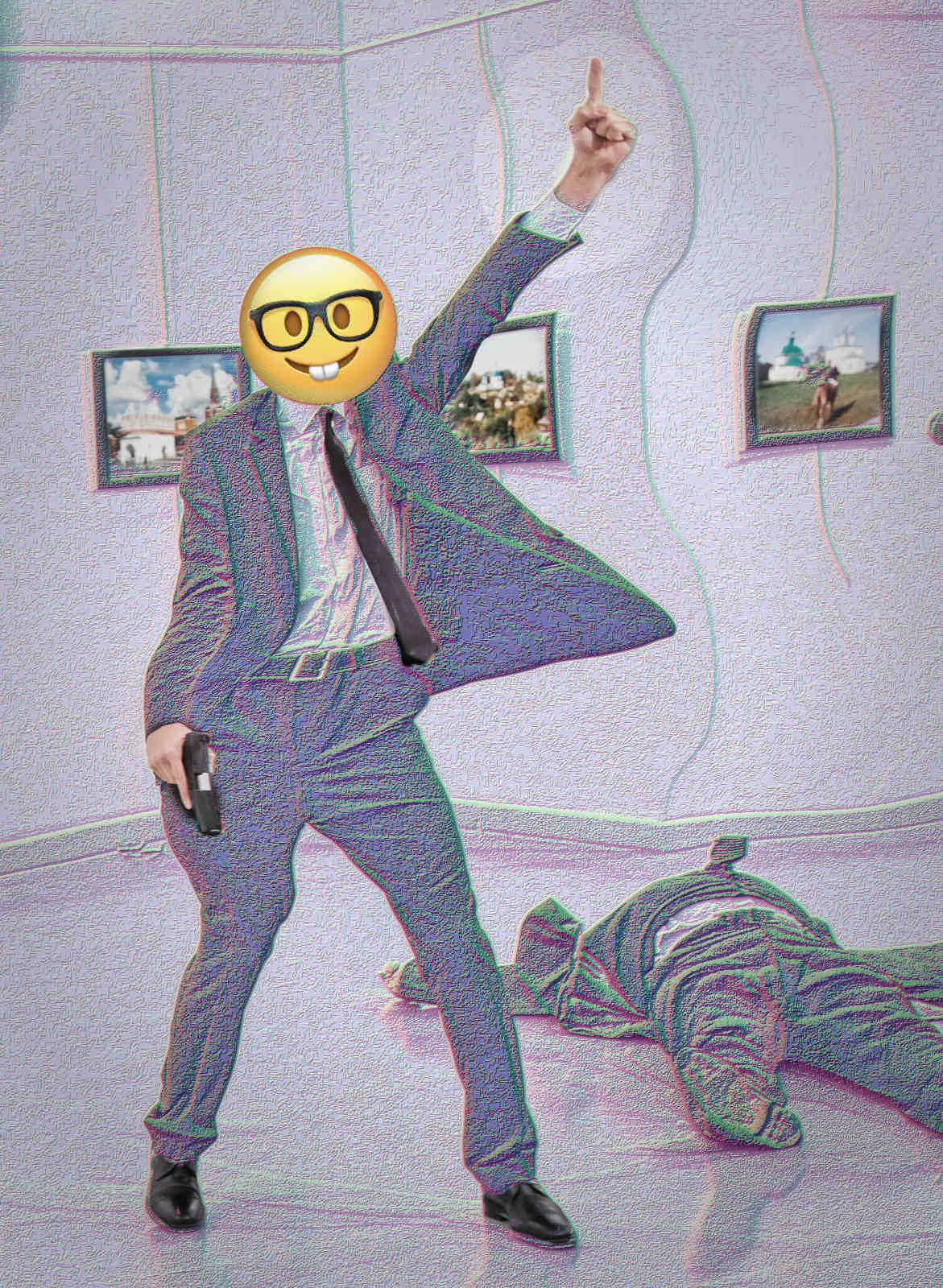
Nerd Face Murder in de galerie. (Political)
Uit de serie: “The Politics of Remembrance”.
Pixel engineering: Keith Rangi & The Travelling Studios. © 2025. Keith Rangi Foundation.
::
De Turkse fotograaf Burhan Ozbilici heeft de World Press Photo of the Year gewonnen. De fotograaf van Associated Press won de prijs voor zijn foto van politieagent Mevlüt Mert Altıntaş in rust, genomen vlak nadat hij de Russische ambassadeur in Turkije had vermoord in een galerie in de Turkse hoofdstad Ankara. Ambassadeur Andrei Karlov is op de achtergrond liggend op de grond te zien, in de rug geschoten.
Originele foto: De schutter na het neerschieten van de Russische ambassadeur. 19 december 2016. Burhan Ozbilici – Associated Press.
Bron: https://www.sbs.com.au/news/article/world-press-photo-of-the-year-sparks-controversy/hmccbmesa
Mord an einem Nerd-Gesicht in einer Galerie. (Politisch)
Aus der Serie: „Die Politik der Erinnerung“.
Pixelentwicklung: Keith Rangi & The Travelling Studios. © 2025. Keith Rangi Foundation.
::
Der türkische Fotograf Burhan Ozbilici wurde zum World Press Photo des Jahres gekürt. Der Fotograf der Associated Press erhielt die Auszeichnung für sein Foto des Polizisten Mevlüt Mert Altıntaş, der außer Dienst ist. Das Foto entstand kurz nach dessen Ermordung des russischen Botschafters in der Türkei in einer Galerie in der türkischen Hauptstadt Ankara. Im Hintergrund ist Botschafter Andrei Karlov auf dem Boden liegend zu sehen, von hinten erschossen.
Originalfoto: Der Schütze nach der Erschießung des russischen Botschafters. 19. Dezember 2016. Burhan Ozbilici – Associated Press.
Quelle: https://www.sbs.com.au/news/article/world-press-photo-of-the-year-sparks-controversy/hmccbmesa
Meurtre d’un nerd face à une galerie. (Politique)
De la série « La politique du souvenir ».
Ingénierie pixel : Keith Rangi & The Travelling Studios. © 2025. Fondation Keith Rangi.
::
Le photographe turc Burhan Ozbilici a remporté le prix World Press Photo de l’année. Le photographe de l’Associated Press a remporté ce prix pour sa photo du policier Mevlüt Mert Altıntaş, en congé, prise quelques instants après l’assassinat de l’ambassadeur de Russie en Turquie dans une galerie d’Ankara, la capitale turque. L’ambassadeur Andreï Karlov est allongé sur le sol en arrière-plan, abattu de dos.
Photo originale : Le tireur après avoir tiré sur l’ambassadeur de Russie. 19 décembre 2016. Burhan Ozbilici – Associated Press.
Source : https://www.sbs.com.au/news/article/world-press-photo-of-the-year-sparks-controversy/hmccbmesa
Nerd Face Murder in the Gallery. (Polityka)
Z serii: „Polityka pamięci”.
Inżynieria pikseli: Keith Rangi & The Travelling Studios. © 2025. Keith Rangi Foundation.
::
Turecki fotograf Burhan Ozbilici wygrał World Press Photo of the Year. Fotograf Associated Press zdobył nagrodę za zdjęcie emerytowanego policjanta Mevlüta Merta Altıntaşa, zrobione krótko po tym, jak zabił ambasadora Rosji w Turcji w galerii w stolicy Turcji, Ankarze. Ambasador Andrei Karlov leży na ziemi w tle, postrzelony w plecy.
Oryginalne zdjęcie: Strzelec po zastrzeleniu ambasadora Rosji. 19 grudnia 2016 r. Burhan Ozbilici – Associated Press.
Źródło: https://www.sbs.com.au/news/article/world-press-photo-of-the-year-sparks-controversy/hmccbmesa
Nerd Face Murder at the Gallery. (Political)
From the series: “The Politics of Remembrance”.
Pixel engineerinhg: Keith Rangi & The Travelling Studios. © 2025. Keith Rangi Foundation.
::
Turkish photographer Burhan Ozbilici has won World Press Photo of the Year. The Associated Press photographer won the honour for his image of off-duty police officer Mevlüt Mert Altıntaş, taken moments after he assassinated Russia’s Ambassador to Turkey at a gallery in the Turkish capital of Ankara. Ambassador Andrei Karlov can be seen lying on the floor in the background, shot in the back.
Original photo: The gunman after shooting the Russian ambassador. 19 december 2016. Burhan Ozbilici – Associated Press.
Source: https://www.sbs.com.au/news/article/world-press-photo-of-the-year-sparks-controversy/hmccbmesa
box
historical
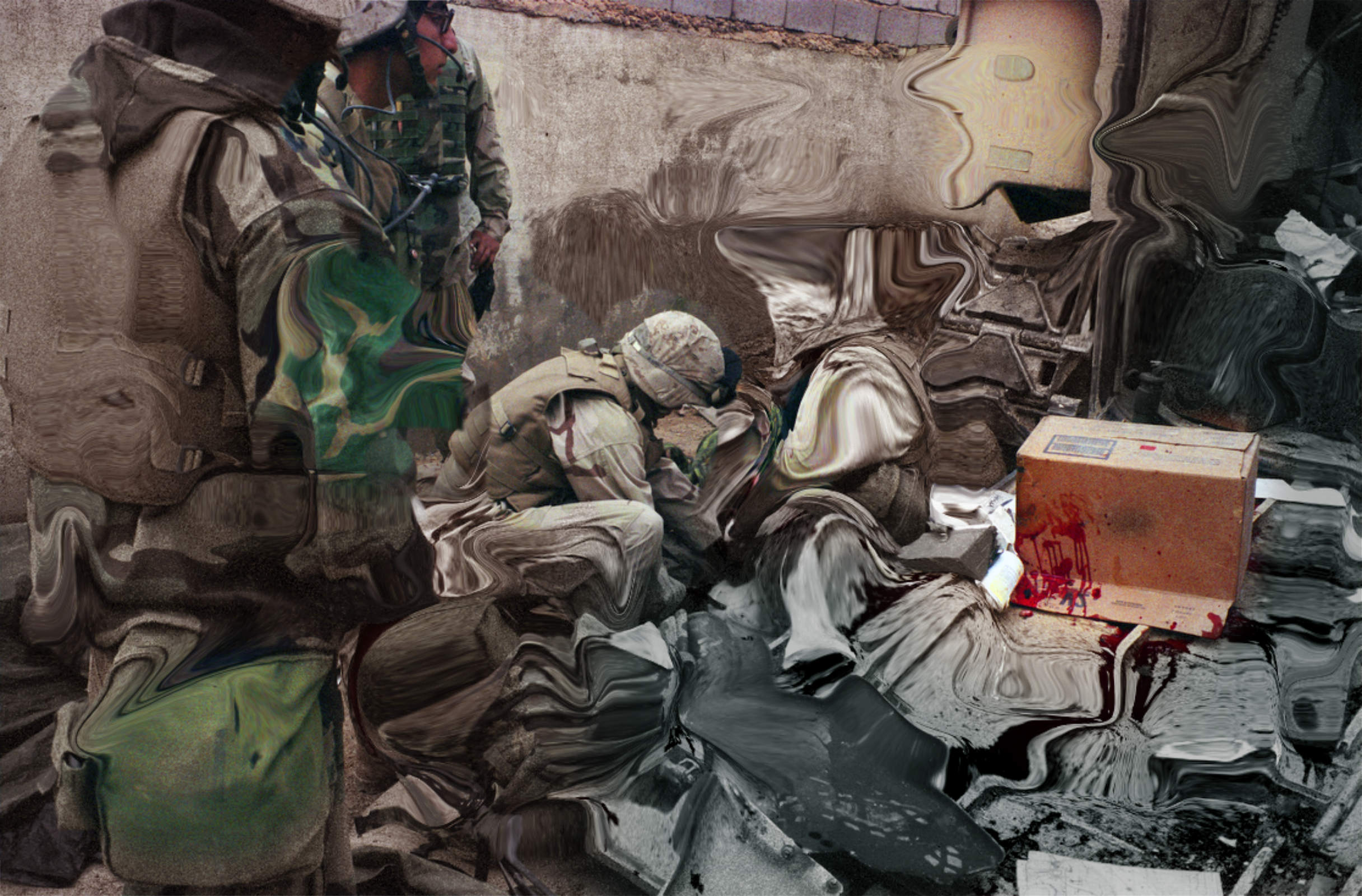
Blood Stained Box in Iraq
Uit de serie: “The Politics of Remembrance”.
Pixelengineering: Keith Rangi & The Travelling Studios. © 2014. Keith Rangi Foundation.
::
Medische kosten voor Amerikaanse veteranen De medische kosten voor Amerikaanse veteranen van de oorlogen in Irak en Afghanistan zouden de komende 40 jaar kunnen oplopen tot $ 350 miljard tot $ 662 miljard, omdat soldaten verwondingen moeten overleven die hen in eerdere conflicten zouden hebben gedood.
::
Bron: https://pix4notes.wordpress.com/2007/02/15/medical-costs-for-us-veterans/
Auteur: Onbekend.
Blutbefleckte Kiste im Irak
Aus der Serie: „Die Politik der Erinnerung“.
Pixelentwicklung: Keith Rangi & The Travelling Studios. © 2025. Keith Rangi Foundation.
::
Medizinische Kosten für US-Veteranen
Die medizinischen Kosten für US-Veteranen der Kriege im Irak und in Afghanistan könnten in den nächsten 40 Jahren zwischen 350 und 662 Milliarden US-Dollar liegen, da Soldaten Verletzungen überleben, die sie in früheren Konflikten getötet hätten.
::
Quelle: https://pix4notes.wordpress.com/2007/02/15/medical-costs-for-us-veterans/
Autor: Unbekannt.
Boîte tachée de sang en Irak
De la série « La politique du souvenir ».
Ingénierie pixel : Keith Rangi et The Travelling Studios. © 2025. Fondation Keith Rangi.
::
Coûts médicaux pour les vétérans américains Les coûts médicaux pour les vétérans américains des guerres d’Irak et d’Afghanistan
pourraient s’élever entre 350 et 662 milliards de dollars au cours des 40 prochaines années, alors que les soldats survivent à des blessures qui les auraient tués lors de conflits antérieurs.
::
Source : https://pix4notes.wordpress.com/2007/02/15/medical-costs-for-us-veterans/
Auteur : Inconnu.
Zakrwawione pudełko w Iraku
Z serii: „Polityka pamięci”.
Inżynieria pikselowa: Keith Rangi & The Travelling Studios. © 2014. Keith Rangi Foundation.
::
Koszty medyczne dla amerykańskich weteranów Koszty medyczne dla amerykańskich weteranów wojen w Iraku i Afganistanie mogą osiągnąć 350–662 miliardów dolarów w ciągu najbliższych 40 lat, ponieważ żołnierze przeżyją obrażenia, które zabiłyby ich w poprzednich konfliktach.
Źródło: https://pix4notes.wordpress.com/2007/02/15/medical-costs-for-us-veterans/
Autor: Nieznany.
Blood Stained Box in Iraq
From the series: “The Politics of Remembrance”.
Pixel engineerinhg: Keith Rangi & The Travelling Studios. © 2025. Keith Rangi Foundation.
::
Medical costs for U.S. veterans
Medical costs for U.S. veterans of the wars in Iraq and Afghanistan
could range from $350 billion to $662 billion over the next 40 years,
as soldiers survive injuries that would have killed them in past conflicts.
::
Source: https://pix4notes.wordpress.com/2007/02/15/medical-costs-for-us-veterans/
Author: Unknown.
mexico
historical
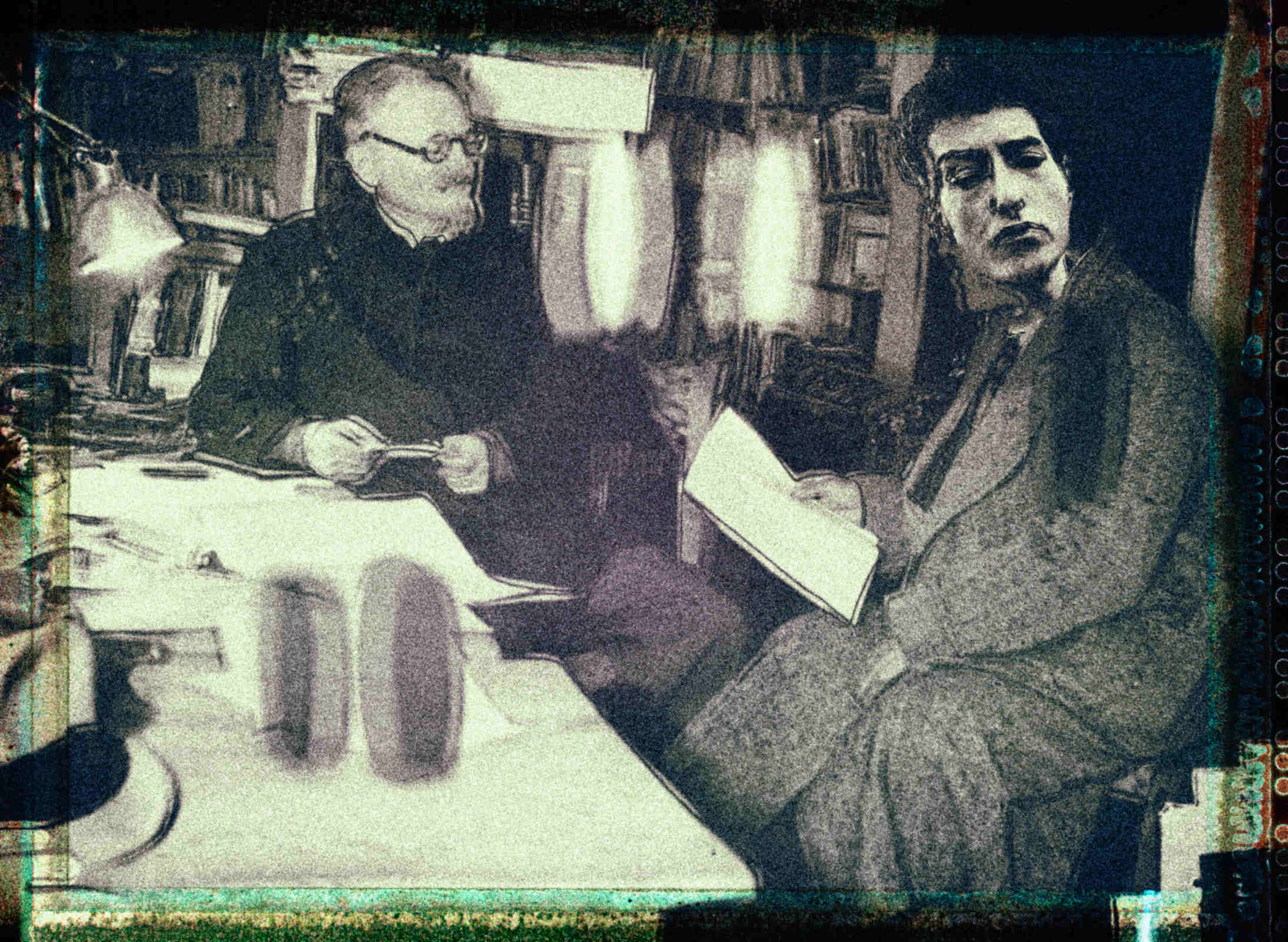
Leon Trotsky in gesprek met Bob Dylan
From the series: “The Politics of Remembrance”.
Pixel engineerinhg: Keith Rangi & The Travelling Studios. © 2025. Keith Rangi Foundation.
::
Leon Trotski tijdens een interview met een redacteur van EL UNIVERSAL op 30 november 1937. Foto’s: EL UNIVERSAL ARCHIEF
::
Source: https://www.eluniversal.com.mx/cultura/la-vida-de-trotsky-en-mexico-y-el-dia-de-la-tragedia-hace-80-anos/
Author: Unknown.
Leo Trotzki im Gespräch mit Bob Dylan.
Aus der Reihe: „Die Politik der Erinnerung“.
Pixeltechnik: Keith Rangi & The Travelling Studios. © 2025. Keith Rangi Foundation.
::
Leo Trotzki im Interview mit einem Redakteur von EL UNIVERSAL am 30. November 1937. Fotos: EL UNIVERSAL ARCHIVES.
::
Quelle: https://www.eluniversal.com.mx/cultura/la-vida-de-trotsky-en-mexico-y-el-dia-de-la-tragedia-hace-80-anos/
Autor: Unbekannt.
Léon Trotsky en conversation avec Bob Dylan
De la série « La politique du souvenir ».
Ingénierie des pixels : Keith Rangi & The Travelling Studios. © 2025. Fondation Keith Rangi.
::
Léon Trotsky lors d’un entretien avec un rédacteur en chef d’EL UNIVERSAL le 30 novembre 1937. Photos : ARCHIVES EL UNIVERSAL.
::
Source : https://www.eluniversal.com.mx/cultura/la-vida-de-trotsky-en-mexico-y-el-dia-de-la-tragedia-hace-80-anos/
Auteur : Inconnu.
Leon Trocki w rozmowie z Bobem Dylanem
Z serii: „Polityka pamięci”.
Inżynieria pikselowa: Keith Rangi & The Travelling Studios. © 2025. Keith Rangi Foundation.
::
Leon Trocki podczas wywiadu z redaktorem EL UNIVERSAL 30 listopada 1937 r. Zdjęcia: EL UNIVERSAL ARCHIVES
Źródło: https://www.eluniversal.com.mx/cultura/la-vida-de-trotsky-en-mexico-y-el-dia-de-la-tragedia-hace-80-anos/
Autor: Nieznany.
Leon Trotsky in conversation with Bob Dylan.
From the series: “The Politics of Remembrance”.
Pixel engineering: Keith Rangi & The Travelling Studios. © 2017. Keith Rangi Foundation.
::
Leon Trotsky during an interview with an editor of EL UNIVERSAL on November 30, 1937. Photos: EL UNIVERSAL ARCHIVES
::
Source: https://www.eluniversal.com.mx/cultura/la-vida-de-trotsky-en-mexico-y-el-dia-de-la-tragedia-hace-80-anos/
Author: Unknown.